

How to Tell if Windows Are Energy Efficient
Table of Contents
Start With the NFRC Label: NFRC Window Ratings Explained
What Each Number on the Label Tells You
Signs of Drafty Windows You Can Check This Weekend
The Five-Minute Walkthrough
The Dollar Bill Test (Weatherstripping and Sash Seals)
The Incense or Smoke Test (Air Infiltration)
The Infrared Thermometer Scan (Insulation and Thermal Bridging)
The Thermal Camera (When You Want a Picture)
What Each Result Actually Means
U-Factor, SHGC, and Visible Transmittance: The Ratings That Decide Comfort
Glass, Gas, and Frames: What Separates Efficient Windows From Basic Ones
Match Your Climate Zone and Check ENERGY STAR Certification
The Federal Tax Credit for Windows 2025 2026: What Still Qualifies
Repair, Seal, or Replace: Payback Math and Maintenance That Buys You Time
Step 1: Diagnose Before You Decide
Step 2: The Cheap Repairs That Buy You Years
Step 3: Estimate Your Annual Savings
Step 4: Calculate Payback
Step 5: Factor In the Federal Tax Credit
Step 6: The Non-Financial Payback
When Replacement Is the Clear Answer
When Repair Is the Clear Answer
Frequently Asked Questions
Last Updated: October 2, 2026
Start With the NFRC Label: NFRC Window Ratings Explained
The fastest way to learn how to tell if windows are energy efficient is to find the NFRC label. This sticker is the gold standard for window performance in the U.S., providing verified ratings for U-Factor, Solar Heat Gain Coefficient (SHGC), and Visible Transmittance. If you are wondering how to tell if windows are energy efficient, start here, it gives you hard data instead of guesswork.
What Each Number on the Label Tells You
Every NFRC label includes several key metrics:
U-Factor: Measures how well a window keeps heat inside. Lower numbers are better.
Solar Heat Gain Coefficient (SHGC): Measures how much heat from sunlight enters your home. Lower numbers mean less heat gain.
Visible Transmittance (VT): Measures how much light passes through the glass. Higher numbers mean more daylight.
Air Leakage (AL): Measures how much air escapes through the frame. Lower numbers are better.
Signs of Drafty Windows You Can Check This Weekend
Before spending a dollar on new windows, spend a weekend confirming whether your current ones are the problem, and where the loss is happening. A high-performance unit can still underperform because of a bad install, a failed seal, or missing weatherstripping.

The Five-Minute Walkthrough
Start with your senses. The classic signs of drafty windows:
Curtains or blinds move on their own on a still day, especially near the bottom sash or frame sides.
A cold or hot plane of air within a foot of the glass.
Visible daylight around the frame when latched, or a gap at the corners.
Fog, haze, or condensation between the panes. This is the most reliable sign the insulated glass unit (IGU) has failed: the seal is broken, the argon or krypton fill has escaped, and no caulking will fix it.
Condensation on the interior glass in cold weather. Some is normal at very low temperatures, but persistent moisture suggests high indoor humidity or a weak U-Factor.
The Dollar Bill Test (Weatherstripping and Sash Seals)
Close the window on a dollar bill so it is pinched between sash and frame, then pull it out.
Easy pull, no resistance: the weatherstripping or the sash lock is not compressing the seal. This is a repair, not a replacement.
Firm resistance: the seal is doing its job at that point.
The Incense or Smoke Test (Air Infiltration)
Light an incense stick and move it slowly along the closed window's perimeter, the meeting rail, corners, sill, and where the frame meets the wall.
Smoke drifts steadily sideways or gets pulled toward a gap: you have an air leak at that point.
Smoke rises straight up: no measurable leak at that location.
The Infrared Thermometer Scan (Insulation and Thermal Bridging)
An infrared thermometer (often under $30) reads surface temperature without contact. On a cold day:
Record the indoor air temperature in the middle of the room.
Scan the center of the glass, the edges of the glass, the frame, and the wall beside the window.
Compare the readings.
Pro Tip Do the scan on the coldest morning you can, before the sun hits the window. Solar gain will skew the readings and make a bad window look good.
The Thermal Camera (When You Want a Picture)
Handheld thermal cameras and smartphone attachments have dropped in price enough that many homeowners and libraries have access to one. A thermal image shows the whole window at once, revealing exactly where cold enters, a blue band along the sill, a cold halo around the frame, or a cold rectangle where the IGU failed. Some utilities lend them out free.
What Each Result Actually Means
Leak at the weatherstripping or sash: repair. New weatherstripping, a sash lock, or a sash adjustment is cheap and effective.
Leak at the frame-to-wall joint: repair. Caulk and low-expansion foam at the rough opening.
Fog between panes: the IGU has failed. Replace the glass unit, or the whole window if it is not serviceable.
Cold glass center with no air leak: the design is weak, likely single-pane or old clear double-pane. This is where replacement math starts to make sense.
Cold frame with warm glass: thermal bridging. A thermally broken frame or different frame material is the fix, which usually means replacement.
Run all four tests before calling a contractor. You'll know whether you need a repair, a glass unit, or a full window, and whether a salesperson is diagnosing the wrong problem.
U-Factor, SHGC, and Visible Transmittance: The Ratings That Decide Comfort
Understanding how U-Factor, SHGC, and Visible Transmittance relate is key to choosing the right window. Together they determine your home's comfort and energy costs.
Rating | What It Measures | Goal for Cold Climates | Goal for Hot Climates |
U-Factor | Heat loss | Low (0.15 - 0.30) | Low to Moderate |
SHGC | Heat gain from sun | High (0.40+) | Low (0.25 or less) |
VT | Daylight | Moderate to High | Moderate |
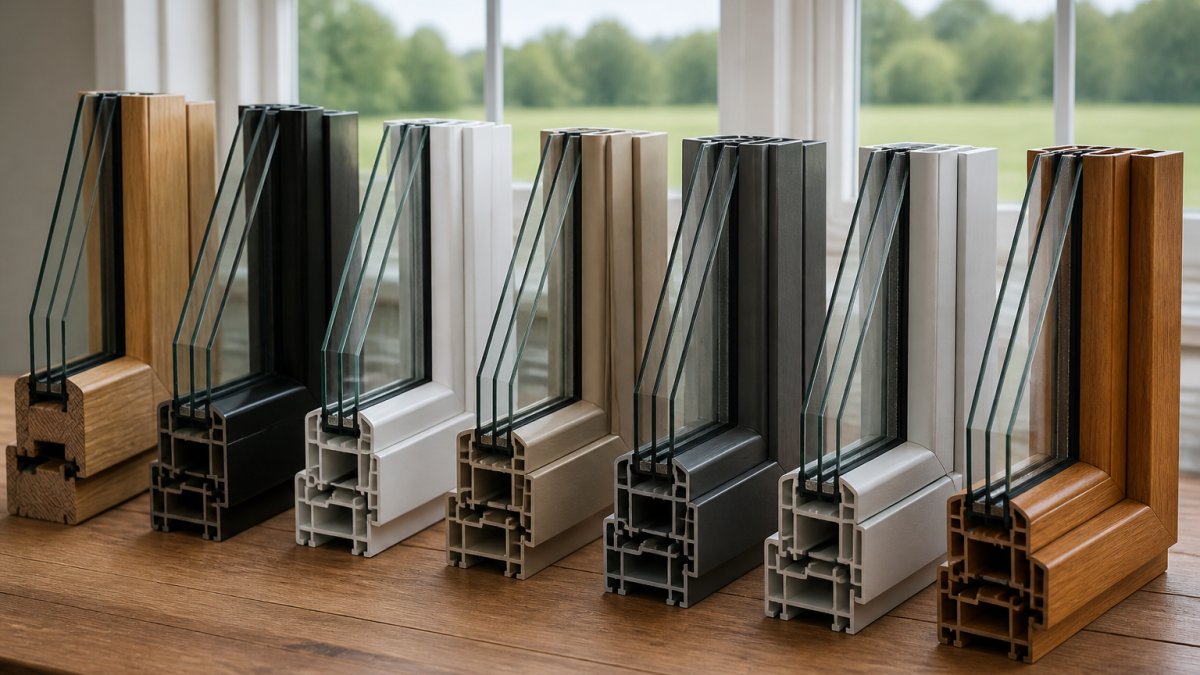
Glass, Gas, and Frames: What Separates Efficient Windows From Basic Ones
Materials determine performance. A basic window is just glass and a frame; an efficient one is a system designed to stop heat transfer.
Match Your Climate Zone and Check ENERGY STAR Certification
A window that works in Maine may be a poor choice in Arizona. Match your window's ratings to your climate zone; the U.S. Department of Energy divides the country by temperature and moisture.
The Federal Tax Credit for Windows 2025 2026: What Still Qualifies
The federal tax credit for windows 2025 2026 is a major incentive for upgrading your home, letting you claim a credit for energy-efficient windows, doors, and skylights.
Repair, Seal, or Replace: Payback Math and Maintenance That Buys You Time
Not every drafty window needs replacing. Three questions decide it: Is the frame sound? Is the glass unit intact? Does replacement actually pay back? Most homeowners skip the third and overpay.
Step 1: Diagnose Before You Decide
Use the weekend tests above to sort windows into three buckets:
Repairable: air leaks at the weatherstripping, sash, or frame-to-wall joint, with clear glass and a solid frame.
Glass-only failure: fog or haze between panes, but the frame and sash are sound. The IGU can often be replaced without touching the frame.
Full replacement: single-pane glass, rotted or warped frames, failed seals on non-serviceable units, or windows so old parts are unavailable.
Step 2: The Cheap Repairs That Buy You Years
Before pricing new windows, price these:
Weatherstripping. V-strip, foam, and felt are common; V-strip lasts longest on sliding and double-hung sashes. A few dollars covers several windows.
Caulk at the exterior and interior perimeter. Use paintable exterior-grade sealant outside and clear interior sealant inside, re-caulking every few years.
Sash locks and tilt latches. A worn lock fails to pull sashes together, so the meeting rail leaks. Replacement is often a five-minute fix.
Spacer and glazing bead. If the spacer bar holding the glass fails, the glass can shift and leak. This is a glazier job, but far cheaper than a new window.
Storm windows. On older single-pane windows, an exterior or interior storm window adds dead air space and meaningfully cuts heat loss for a fraction of replacement cost.
Key Takeaway If the frame is solid and the glass is clear, repair first. Replacement only wins the math when the glass unit itself has failed or the frame is beyond saving.
Step 3: Estimate Your Annual Savings
You cannot calculate payback without a savings number, and you cannot get one without your own bills. The framework:
Pull twelve months of utility bills. Add up heating and cooling spend.
Estimate the window share. Windows are one of several heat-loss paths, walls, attic, ducts, and air sealing all matter. A common planning assumption is roughly a quarter to a third of heating and cooling load, but this varies widely with house age and envelope condition. Treat any percentage as a starting point, not a promise.
Apply the improvement factor. Going from single-pane clear glass to high-performance double-pane with low U-Factor and low-E can substantially cut heat flow through glass; from decent double-pane units, the marginal gain is much smaller.
Multiply. Annual heating and cooling spend × window share × improvement factor = estimated annual savings.
Step 4: Calculate Payback
The formula is simple:
Payback period (years) = Total installed cost ÷ Estimated annual savings
Watch Out Be skeptical of any savings figure a salesperson gives you that is not tied to your actual utility bills. National averages are a starting point, not a forecast for your house.
Step 5: Factor In the Federal Tax Credit
The federal tax credit for windows is a dollar-for-dollar reduction in what you owe, not a deduction. It applies to qualifying products that meet specific U-Factor and SHGC thresholds, and it is capped per year across doors and windows combined. Because the qualifying thresholds and the cap have changed across recent tax years, confirm the current rules for the year you install before you buy.
Step 6: The Non-Financial Payback
Payback math misses three things many homeowners value:
Comfort. Eliminating a cold draft near a favorite chair is worth real money, even when energy math is marginal.
Noise. Laminated glass and thicker IGUs noticeably cut outside noise, a quality-of-life return not on any utility bill.
Condensation control. Better windows reduce interior condensation, protecting trim, sills, and paint from rot and mold.
When Replacement Is the Clear Answer
Replacement wins when:
Glass units have failed (fog between panes) and frames are not serviceable.
Frames are single-pane aluminum with no thermal break, or wood with rot.
You are already remodeling the wall or siding, so install labor is partly paid for.
You plan to stay long enough to capture comfort and resale benefits, even if energy payback is long.
When Repair Is the Clear Answer
Repair wins when:
Glass is clear and the frame is solid.
Leaks are at the weatherstripping, sash, or perimeter, all cheap fixes.
Current windows are already double-pane with a reasonable U-Factor, so replacement gains are small.
You are selling soon and cannot recoup the cost.
Run the numbers on your own bills before signing anything. The best outcomes go to homeowners who know which windows are actually failing and which just need a Saturday afternoon of maintenance.
Frequently Asked Questions
Is .27 a good U-factor for windows?
Yes. A U-factor of .27 meets the ENERGY STAR Version 7 requirement for windows in the northern half of the country, where the limit is .28. Lower numbers mean less heat escapes, so .27 performs better than a .30 window. Check the NFRC label on the glass; the U-factor is usually the first number listed. For comparison, an old single-pane window often sits around 1.0 or higher.
How do I read an NFRC label on a window?
Find the label on the glass or frame. It lists the U-factor, Solar Heat Gain Coefficient (SHGC), and Visible Transmittance (VT). The U-factor shows how fast heat escapes, SHGC shows how much solar heat gets in, and VT shows how much daylight passes through. The label also names the manufacturer, the product line, and the certification body. Write the numbers down before you shop so you can compare quotes.
Is there a federal tax credit for energy-efficient windows in 2026?
Yes. The Energy Efficient Home Improvement Credit covers 30% of the cost of qualifying windows, up to $600 total for all windows and skylights in a year. Windows must meet ENERGY STAR Version 7 requirements and carry a valid NFRC label. Keep your receipts and the manufacturer's certification statement. Rules can change, so confirm details with a tax professional before filing.
What are the signs that my current windows are failing?
Watch for condensation between panes, a draft you can feel with your hand, rising heating bills in winter, and foggy or clouded glass. Check the weatherstripping for cracks and the seals around the frame for gaps. A window that sticks, rattles in the wind, or lets in outside noise is also a candidate. If several of these show up at once, the window is likely past its useful life.
Upgrading your windows is a big decision, but you do not have to do it alone. If your diagnostics show it is time for a replacement, Xperienced is here to help. As a veteran-owned company, we specialize in expert installation of premium products like Regency Plus windows. We offer a stress-free process with financing options and strong warranties to protect your investment. Get a quote from Xperienced and start saving on your energy bills today.
GET A QUOTE

Comments